Free Camping and Outdoor Gear Trials Worth Packing This Season
The Great Outdoors Comes With a Price Tag
Camping and hiking have a reputation as affordable hobbies, and in many ways they are. The trails are free, the views cost nothing, and a night under the stars beats the price of most hotel rooms. But anyone who has outfitted a first camping trip knows how quickly the costs climb. A tent, sleeping bags, sleeping pads, a camp stove, cookware, headlamps, water filters, and weather-appropriate layers can add up to hundreds or even thousands of dollars before you ever leave the driveway. And it is common to buy gear that turns out to be too heavy, too bulky, or simply wrong for the kind of trips you actually take.
Testing before you buy makes outdoor adventures far more affordable. Gear rentals, used marketplaces, library lending programs, free park entry days, and food and snack samples all help you get outside without committing to a full set of expensive equipment. This round-up covers the best ways to try camping and outdoor gear for little or nothing, plus tips for saving on the trip itself.
Rent Before You Buy
Renting gear is one of the smartest ways to figure out what you actually need. Many outdoor retailers and local outfitters rent tents, sleeping bags, backpacks, stoves, snowshoes, and other equipment for a weekend or a week. REI’s rental program, available at many of its stores, lets you check out camping and snow gear for a trip at a fraction of the cost of buying, with discounted rates for co-op members. Renting lets you learn whether you prefer a lightweight backpacking tent or a roomy car camping setup, and whether a particular sleeping bag keeps you warm enough at the temperatures you camp in.
Local outfitters near popular parks, ski areas, and lakes often rent specialized equipment such as kayaks, paddleboards, climbing gear, and winter gear. If you are trying a new activity for the first time, renting for a single trip is far less expensive than buying equipment that might end up gathering dust in the garage. Some rental shops also apply part of the rental fee toward a purchase if you decide to buy the same item later, so it is worth asking.
Borrow Gear From the Library and Community Programs
Many public libraries have expanded far beyond books, and some now lend outdoor equipment through “library of things” collections. Depending on your library, you may be able to borrow items such as binoculars, fishing poles, snowshoes, trekking poles, birding kits, or even camping gear with nothing more than a library card. Some state library systems also partner with state parks to offer free parking or day-use passes that patrons can check out like a book.
Community programs offer more options. Outdoor clubs, scouting organizations, university recreation centers, and nonprofit groups focused on getting more people outside sometimes run gear libraries or loan closets. Asking around in local hiking groups or community forums can also turn up friends and neighbors willing to lend equipment for a weekend, especially for big-ticket items like tents and coolers that sit unused most of the year.
Buy Used and Trade In
Once you know what gear you like, buying used can cut costs dramatically. Outdoor equipment is built to be durable, and many items are sold barely used after someone decides the hobby is not for them. REI’s used gear marketplace offers inspected secondhand equipment and clothing, and members can trade in eligible gear they no longer need for credit. Local consignment shops, gear swaps, and online marketplaces are also good places to find tents, packs, and jackets at a fraction of retail prices.
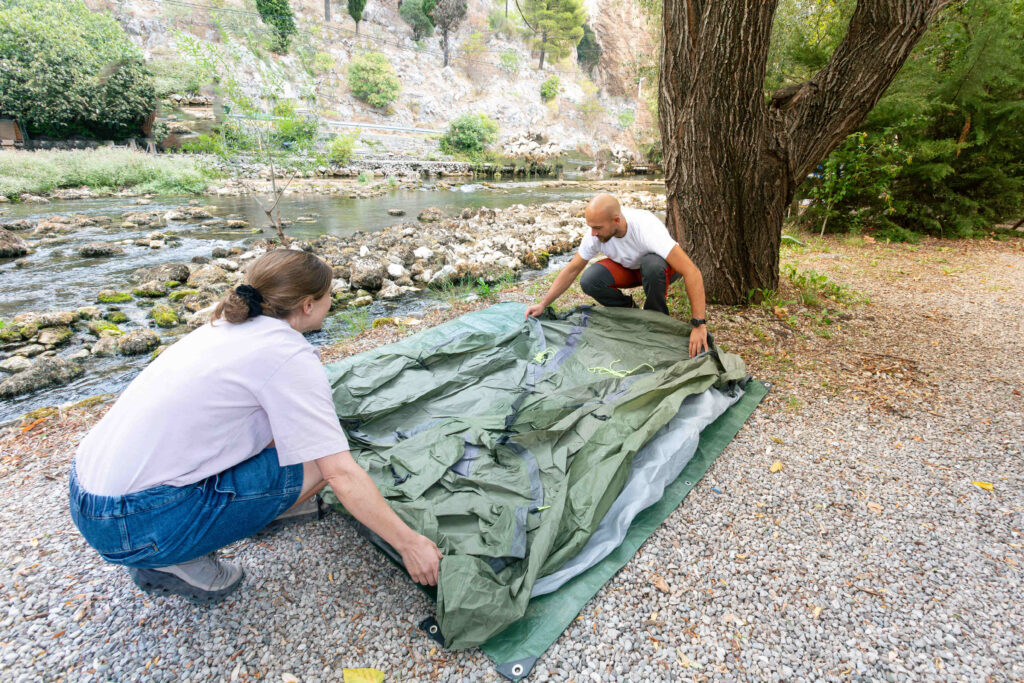
When buying used, inspect items carefully. Check tents for missing stakes, torn mesh, and broken poles, and set them up at home before your trip. Look for intact zippers and seams on sleeping bags and backpacks, and avoid buying used safety equipment such as climbing ropes or helmets unless you know their full history.
Take Advantage of Free Park Entry
Getting into parks and public lands is often free or inexpensive, and a few programs can eliminate entry fees entirely. The National Park Service offers several fee-free days each year when entrance fees are waived at parks that normally charge them. The NPS fee-free days page lists the upcoming dates, and recent changes limited free entry on these days to U.S. citizens and residents. Keep in mind that camping, reservation, and permit fees typically still apply on fee-free days.
Many national park units do not charge entrance fees at all, and national forests, Bureau of Land Management lands, and wildlife refuges often offer free or low-cost access. Free annual passes are also available to certain groups, including current military members and volunteers who complete enough service hours on federal lands. State parks run their own fee-free days and discount programs, so check your state parks website for upcoming dates. When you do need a campsite, Recreation.gov lets you search and reserve sites on federal lands, and booking early is often the key to securing affordable spots in popular areas.
Sample Trail Snacks and Camp Food
Food is one of the easiest places to save on an outdoor trip, and samples help you figure out what you actually enjoy eating on the trail. Energy bars, electrolyte drink mixes, jerky, and freeze-dried meals are frequently offered as samples at outdoor retailers, races, trade events, and through brand email lists. Some outdoor food brands also send sample packs or discounts to new subscribers, which is a great way to taste-test before buying a case.
Testing camp food at home first is a smart move. Freeze-dried meals vary widely in flavor, texture, and portion size, and finding out that you dislike a meal on night one of a backpacking trip is a hungry lesson. Grocery store staples such as instant oatmeal, tortillas, peanut butter, rice packets, and dried fruit can also replace many expensive specialty trail foods at a much lower cost.
Try Before You Commit to Outdoor Clothing
Outdoor clothing is another category where costs add up fast. Technical jackets, base layers, hiking boots, and wool socks can all carry premium price tags, and fit matters enormously. Trying gear on in person, especially footwear, can prevent costly returns and painful blisters. Many outdoor retailers have generous return policies for members, which can make it less risky to test boots or packs on short local hikes before a big trip.
You may not need specialized clothing for every activity. Moisture-wicking workout clothes, fleece layers, and a basic rain jacket you already own can handle many day hikes and car camping trips. Invest first in the items that most affect comfort and safety, such as footwear and a warm, waterproof layer, and add specialty pieces gradually as your adventures grow.
Plan Smarter, Spend Less
A little planning goes a long way toward keeping outdoor trips affordable. Camping with friends lets you share the cost of campsites, food, and gear. Choosing destinations closer to home reduces fuel costs, and camping during shoulder seasons often means fewer crowds and easier reservations. Keeping a checklist of the gear you own and what you still need helps you avoid buying duplicates.
Most importantly, prioritize safety over savings. Always check the weather forecast, tell someone your plans, bring enough water and layers, and carry a basic first aid kit. Free and borrowed gear is a great way to save, but make sure everything you pack is in good working order before you head out.
Get Outside for Less
Exploring the outdoors does not require a garage full of expensive gear. By renting equipment, borrowing from libraries and community programs, buying used, taking advantage of free park entry days, and sampling trail food before you buy in bulk, you can enjoy camping and hiking on almost any budget. Test what works, invest in what you love, and spend more time outside and less money getting there.